Signature Products, Unmatched Quality


  • yx
  • yx
  • whatsapp
  • Twitter
  • Facebook
Leave Your Message

Top Office Drawers With Lock Manufacturers in China

Secure storage has become a practical part of modern office planning. Grand View Research estimated the global office furniture market at approximately USD 59.6 billion in 2023 and projected a 5.4% compound annual growth rate from 2024 to 2030. This broad market estimate does not isolate lockable drawers, but it signals sustained investment in workplace furniture.

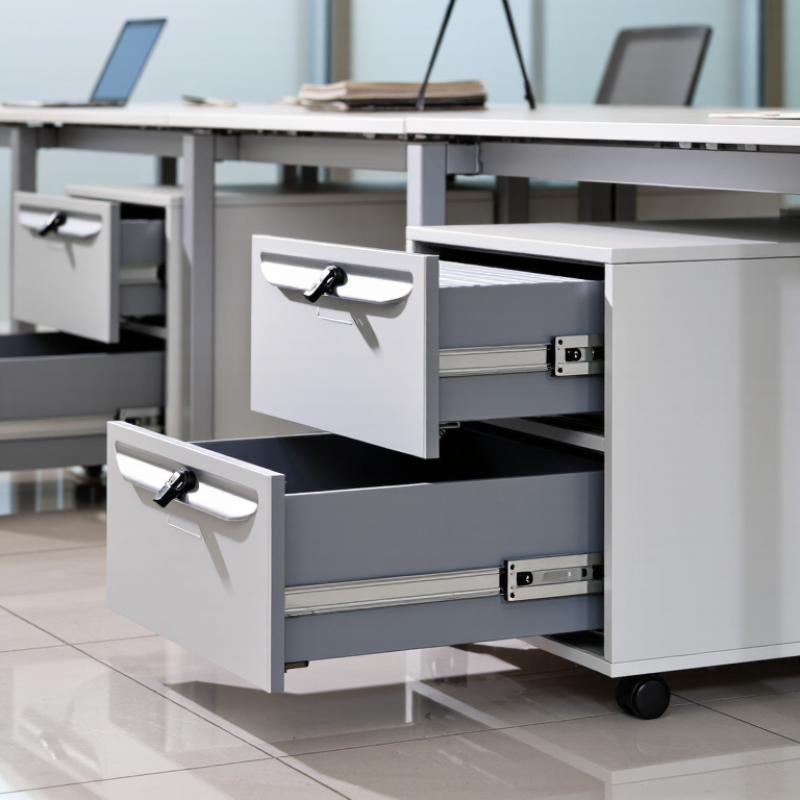
Small details matter. A drawer that looks sturdy may still have a weak lock, thin steel, or a slide that struggles under daily use. Buyers comparing Office Drawers With Lock should check materials, locking systems, drawer capacity, finish quality, and available dimensions. Ask manufacturers for product specifications and test documentation, rather than relying on appearance alone. A lock helps control access; it does not replace sound key management or appropriate workplace procedures.

China has a large furniture manufacturing base, but suppliers differ in production capabilities and quality controls. This guide introduces leading manufacturers and helps buyers compare their products, customization options, OEM services, and export experience. Where possible, verify sample quality, packaging, and delivery terms before placing a bulk order. One point deserves caution: “top” is not a universal ranking. The right supplier depends on your budget, required specifications, and order size. Even a careful comparison can miss something; factory claims should be checked against documents and samples.
Top Office Drawers With Lock Manufacturers in China

Office Drawer Locks Defined: Cabinet-Lock Types and Core Components

Office drawer locks are small parts, but they determine whether a cabinet stays private during shared use. Grand View Research valued the global furniture market at USD 736.6 billion in 2023 and projected 5.0% annual growth through 2030. This broad market figure is not a lock-sales measure; it signals the scale of furniture procurement. For buyers assessing Chinese manufacturers, lock construction and drawer fit matter more than a polished catalog photo.

A cam lock uses a keyed cylinder and rotating metal cam to catch behind the cabinet wall. Central locking adds rods or linkages, letting one key action secure several drawers. Electronic keypad versions replace the key cylinder with a keypad, control unit, and powered latch. Simple. Not foolproof. Common core parts include the housing, plug, cam, retaining nut, keys, and mounting hardware.

Material and tolerance choices shape service life: a loose cam can rattle, while a tight fit can bind. Ask suppliers for cycle-test records, corrosion checks, key-code control, and samples fitted to the actual drawer thickness. Confirm whether replacement cylinders are available; a lost key should not force cabinet replacement. Some specifications leave too much unsaid.

Source: Grand View Research, Furniture Market Size, Share & Trends Analysis Report, 2024–2030.

Top Office Drawers With Lock Manufacturers in China - Office Drawer Locks Defined: Cabinet-Lock Types and Core Components

Lock Type How It Works Core Components Typical Office Use Selection Considerations
Cam lock Turning the key rotates a cam behind the cabinet panel to block or release the door or drawer. Lock body, plug or cylinder, cam, key, retaining nut or clip Single drawers, cabinet doors, and small storage compartments Check panel thickness, mounting-hole size, cam length, and cam orientation.
Wafer tumbler lock The correctly cut key aligns spring-loaded wafers so the plug can turn. Plug, wafers, springs, housing, key, and cam or latch Common cabinet and desk-lock applications where a compact keyed mechanism is needed Consider keying requirements, operating environment, and compatibility with the cabinet fitting.
Pin tumbler lock Key cuts position pin pairs at the plug’s shear line, allowing the plug to rotate. Plug, pin chambers, key pins, driver pins, springs, housing, and cam or bolt Cabinets and drawers requiring a keyed cylinder arrangement Confirm cylinder dimensions, keying plan, and the lock’s intended installation position.
Combination lock A preset sequence aligns internal gates or discs to release the locking mechanism. Combination wheels or dials, internal gates or discs, spindle, and latch or cam Personal storage cabinets and drawers where key-free access is preferred Review reset procedures, code-management needs, and access requirements if the code is forgotten.
Electronic keypad lock A valid code is checked by an electronic control circuit, which releases a mechanical latch or actuator. Keypad, control circuit, power source, actuator, and mechanical latch Shared-use storage and applications that need code-based access Check power and battery access, emergency-entry method, code management, and mounting dimensions.
Central locking system One lock operation moves a linkage that secures multiple drawers or compartments. Lock cylinder, locking bar or rods, connecting clips, guides, and drawer catches Multi-drawer desks and filing cabinets designed for linked locking Verify cabinet layout, linkage travel, alignment, and compatibility with all connected drawers.

Components and installation requirements vary by lock design and cabinet construction. Confirm dimensions and operating requirements against the intended furniture before selection.
Performance Benchmarks: ANSI/BHMA A156.11 Grades and Test Methods

For office drawer locks, ANSI/BHMA A156.11 provides a useful benchmark for comparing cabinet-lock performance. Its grade levels indicate tested performance, but buyers should confirm that a reported grade applies to the exact lock type and current standard edition. A label alone is not enough.

Testing may include repeated operation, security-related loading, and checks on lock components, depending on the lock category. In practical terms, evaluators should ask whether the key turns consistently, the bolt engages fully, and the lock continues working after repeated use. A drawer in a busy office may be opened dozens of times daily. Small alignment changes can matter. Test conditions and pass criteria should be reviewed in the supplier’s report, not inferred from a product description.

For meaningful comparisons, request traceable test documentation and confirm the tested model matches the offered hardware. Ask how the lock performs when installed in the intended drawer material and thickness; installation can affect bolt engagement. Also check whether testing was conducted by a qualified laboratory and whether the report identifies the methods used. There is a limitation: laboratory results cannot reproduce every field condition. A high grade is useful evidence, not a guarantee of trouble-free service. The distinction deserves attention.

Furniture Quality Checks: GB/T 3325-2017 and BIFMA X5.5

For buyers comparing office drawer manufacturers in China, GB/T 3325-2017 and BIFMA X5.5 offer useful—but not interchangeable—quality checks. GB/T 3325-2017 sets general technical requirements for metal furniture, while BIFMA X5.5 covers desk and table products. Confirm that the tested product type matches the actual drawer unit; a standard’s name alone proves little. A Grand View Research report estimated the global office furniture market at USD 54.5 billion in 2023, reflecting a large market where documented testing can help buyers compare suppliers.

Ask for test reports identifying the sample, test method, date, and laboratory. Inspect drawer travel under load, lock engagement, cabinet stability, and exposed edges. Open and close each drawer repeatedly; uneven motion or a loose lock deserves investigation. For integrated desk drawers, check whether the complete desk assembly—not only a component—was evaluated under applicable BIFMA procedures. Test results do not guarantee identical performance in every installation.

Tips: Request a sample and check its loaded drawers on a level floor. Record the drawer load and test conditions. Small gaps matter. I would also verify the current standard edition and report scope; this step is easy to skip, and supplier paperwork can look more conclusive than it is.

Comparing Chinese Manufacturers by Materials, Capacity, and Lock Options

When comparing Chinese office-drawer manufacturers, start with materials and intended load. Cold-rolled steel suits shared offices where impact resistance and easy cleaning matter. Powder-coated finishes help protect surfaces, though coating quality varies. Melamine-faced particleboard can reduce cost and soften a room’s appearance, but edges need careful inspection. Grand View Research valued the global office-furniture market at about $59.8 billion in 2023, reflecting broad demand—not proof that any supplier meets your specifications. Ask for material thickness, drawer-load ratings, and test documentation.

Capacity depends on more than external dimensions. Check usable drawer width, depth, slide extension, and rated load; a deep drawer with weak slides may disappoint. Lock options range from keyed cylinders to combination or electronic systems. Confirm whether one lock secures every drawer, whether spare keys are available, and how replacements are handled. For a useful benchmark, ANSI/BIFMA X5.9-2019 covers performance and testing of storage units. Request the relevant test results rather than relying on a catalog claim. Small details matter.

Tips: Compare samples or clear interior measurements, not just photos. Ask manufacturers to state load limits in writing and identify the lock type. A cheaper unit can still work well, but only if its slides and locking mechanism suit daily use. Even then, specifications may not capture every real-office problem.

Factory Verification: ISO 9001, ISO 9227 Corrosion Testing, and Traceability

For office drawers with locks, factory verification should begin with the actual production site, not a certificate image.

Ask for the ISO 9001 certificate number, covered address, scope, and expiry date, then confirm them with the issuing certification body. The ISO Survey 2022 recorded 1,265,216 ISO 9001 certificates worldwide. That scale shows how common certification is; it does not prove that a particular drawer factory controls every process well. A neat certificate folder can still hide gaps.

For corrosion checks, request the ISO 9227 method used, the tested component, exposure duration, and original lab report. The standard covers salt spray test procedures, but a test result is not a direct promise of years in service. Look for photographs of panels, coating defects, and lock hardware before and after testing.

Small details matter. Traceability should connect steel and coating batches to production dates and inspection records. Ask the factory to trace one finished drawer backward, from its carton label to material and test records.

If the chain breaks, note it. Verification can be imperfect; recording the gap is better than treating a passing sample as proof of every shipment.