7 Tips for Choosing the Best Stainless Steel Drawer Lock
A Stainless Steel Drawer Lock may look like a small fitting, but its material, dimensions, and locking action affect daily use. Choose poorly, and the key can catch, the bolt can miss its strike plate, or the drawer front can show scratches around the mounting hole. Choose carefully, and the lock can feel smooth and secure through years of ordinary opening and closing. Small details matter.
This guide explores seven practical checks: stainless-steel grade, drawer thickness, lock style, cylinder quality, installation space, finish, and maintenance. A magnet test alone cannot confirm steel grade, and “stainless” does not mean stain-proof in every environment. That point is easy to miss. Measure the panel and available clearance before ordering; a lock that fits the catalog description may still clash with a nearby divider.
A named expert quotation needs a verifiable source. None was supplied here, so I will not invent an industry specialist or attribute made-up words to one. Instead, keep this useful buying principle in view: match the lock to the drawer’s construction and the conditions it will face. Consider who uses the drawer, how often it opens, and whether fingerprints or moisture are concerns. Some trade-offs remain. The most polished finish is not always the easiest to maintain, and the lowest price may not deliver the smooth action you expect. These tips help narrow the choice with real measurements, clear priorities, and a little healthy skepticism.
Identify the Drawer’s Security and Usage Requirements
Before choosing a stainless steel drawer lock, identify what the drawer protects and who needs access. A drawer holding spare keys or small tools may need more control than one storing paper clips. Start with the contents. Consider whether the concern is casual opening, frequent handling, or access by several people. A lock can discourage unwanted access, but it cannot strengthen a flimsy drawer or prevent someone from removing the entire cabinet. That matters.
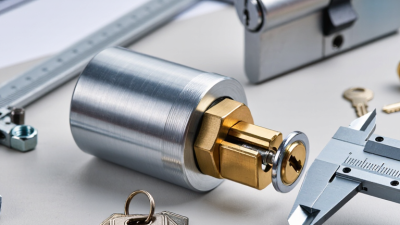
Usage affects the right choice, too. A workshop drawer opened with dusty hands may need a simple mechanism that is easy to operate and clean. For a cabinet used by several staff members, consider how keys will be shared and stored. Measure the drawer front, available installation depth, and clearance behind it; a lock that fits on paper may collide with a rail. In practical selection, these small checks prevent frustrating rework. I would not assume that the strongest-feeling lock is automatically best. If users struggle to operate it, they may leave it unlocked. Match the lock’s level of control to the drawer’s contents, access routine, and construction, then test the fit before installation.
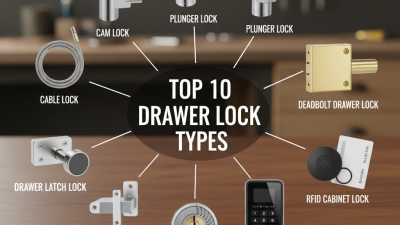
Compare Lock Types and Their Security Features
7 Tips for Choosing the Best Stainless Steel Drawer Lock
Compare Lock Types and Their Security Features
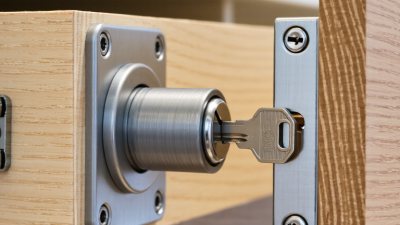
A cam lock is compact and easy to fit on a stainless steel drawer. Its rotating tongue secures the drawer behind the front panel, but a thin panel or loose mounting can undermine it. Check the lock’s fixing method and the drawer’s construction, not just its finish. Small details matter.
Pin-tumbler locks offer familiar keyed access and can provide more key-control options than basic wafer locks. However, cylinder quality varies, and a better keyway cannot compensate for a weak drawer face. Electronic locks allow keypad or credential access; some models also record openings. They need reliable power and a backup plan. Simple, but not foolproof.
For a standards-based comparison, consult ANSI/BHMA A156.11, which covers performance testing for cabinet locks. The FBI’s 2023 Crime in the Nation report estimated 847,522 burglary offenses in the United States. That figure describes burglary, not drawer-lock failures, so it cannot show which lock type performs best. Match the lock to the contents, access frequency, and mounting conditions. A high-security cylinder on a flimsy drawer may be an expensive mismatch. Check fit in person when possible; product measurements can be less clear than expected.
Check Stainless Steel Grade and Corrosion Resistance
Stainless steel is not one uniform material, so the grade can affect how long a drawer lock stays sound. For dry indoor furniture, Type 304 often provides useful corrosion resistance at a reasonable cost. Grade matters. In kitchens, workshops, or coastal rooms, moisture and cleaning residue may collect around the lock face. Type 316 contains molybdenum, which improves resistance to chloride exposure, including salt spray. That extra protection may be worthwhile near the sea. Still, grade alone does not guarantee a durable lock. I would not rely on a small “stainless” label without checking the product specification; it may describe only the outer housing.
Look at the bolt, cylinder surround, screws, and any exposed spring as well. Mixed metals can corrode differently, especially where damp surfaces stay in contact. A brushed finish can hide fingerprints, but deep scratches and tight crevices may hold water and grime. Check for smooth edges and drainage around the mounting area.
Keep it simple.
After installation, wipe the lock with a soft damp cloth and dry it, particularly after salty or chemical splashes. Harsh cleaners can damage finishes. One detail is easy to overlook: a lock can look spotless while corrosion starts beneath a screw head. Grade information helps, but regular inspection still matters.
Assess Key Control, Durability, and Maintenance
Key control begins with deciding who truly needs access. A keyed-different system limits casual sharing between drawers, while keyed-alike locks make routine access easier. Keep a simple record of issued and spare keys. Small details matter. If several people share keys, the record can become outdated; review it whenever staff or storage needs change.
Durability depends on the drawer’s environment, not just the word “stainless.” Humidity, cleaning chemicals, and salt can still contribute to corrosion. The 2016 NACE International IMPACT study estimated corrosion’s global cost at $2.5 trillion, or 3.4% of global GDP, and said corrosion-control practices could save 15–35%. That broad industrial estimate is not a drawer-lock forecast, but it shows why material choice and upkeep deserve attention. Check the lock’s stated material grade and inspect the cam, screws, and strike for rust or looseness.
Maintenance should be simple enough to repeat. Wipe away dust and moisture with a soft cloth, then dry the lock; avoid abrasive pads that may mark the finish. Check it monthly. Turn the key gently and notice any sticking before it becomes a failure. Use only lubrication recommended in the product instructions, since excess oil can collect grit. A lock can look clean and still bind.