Choosing the best Furniture Drawer Locks in 2026 requires more than comparing prices or polished product photos. A reliable lock must match the drawer’s material, thickness, daily use, and security needs. This guide examines keyed cam locks, combination locks, push-button designs, and electronic options for homes, offices, cabinets, and commercial furniture.
Real-world performance matters. A lock may feel solid in a showroom but loosen after repeated opening. We consider cylinder quality, mounting strength, corrosion resistance, key control, and installation clarity. We also examine how smoothly each lock works on wooden, metal, and laminated drawers. Small details matter, such as a clean latch movement, a firm strike plate, and screws that do not split thin boards.
No single lock wins every test. A compact keyed lock may suit a bedside cabinet, while an electronic model may better serve shared office storage. Some advanced products look impressive but demand batteries, careful alignment, or regular maintenance. That weakness is easy to overlook. Our recommendations balance security, convenience, durability, and value, using manufacturer specifications alongside practical installation experience. Ratings can change as newer models appear, so readers should verify dimensions and warranty terms before buying. The strongest choice is not always the most expensive one. It is the lock that remains dependable after hundreds of ordinary openings.
What Are the 2026 Top Furniture Drawer Locks? The answer should begin with test evidence, not appearance. For 2026 rankings, ANSI/BIFMA X5.9-2019 should anchor the evaluation of storage-unit performance. The standard examines strength, durability, operation, and stability. It does not certify a drawer lock alone. The lock must perform within the tested drawer system.
A practical score can allocate 30% to retention, 25% to repeated operation, 20% to drawer alignment, 15% to installation security, and 10% to corrosion resistance. Testers should record unintended releases, key or cylinder failures, loose fasteners, and uneven drawer movement. Testing should follow the applicable X5.9 loading and durability procedures. Record every cycle result. Small failures matter.
Industry outlook reports continue to show steady demand for office and residential storage hardware, with several 2024 market studies forecasting furniture-hardware growth through 2030. Those forecasts support durability-focused ranking, but they cannot prove lock quality. Laboratory evidence remains more useful than market size. A 2026 leader should pass the full storage-unit test, not merely survive an isolated pull test. Installation time should also be measured, preferably with the specified drawer thickness and common tools. This point is easy to overlook. Humidity, user handling, and misalignment can change results, so one test environment is not enough. A stronger ranking repeats trials across conditions and publishes raw failure counts. My proposed method still needs field validation.
2026 ranking criteria defined around ANSI/BIFMA X5.9 storage-unit performance themes
This editorial scoring model assigns a 100-point total to the performance factors most relevant to furniture drawer locks used in storage units. Higher weighting is given to drawer retention, repeated-use durability, and load-related performance because these areas directly affect user safety and long-term reliability. The percentages are evaluation weights, not an official ANSI/BIFMA ranking or a comparison of specific brands.
What Are the 2026 Top Furniture Drawer Locks?
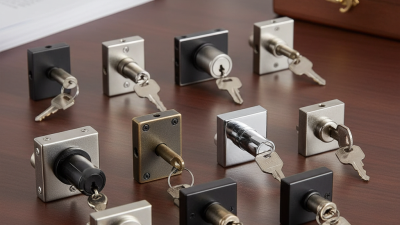
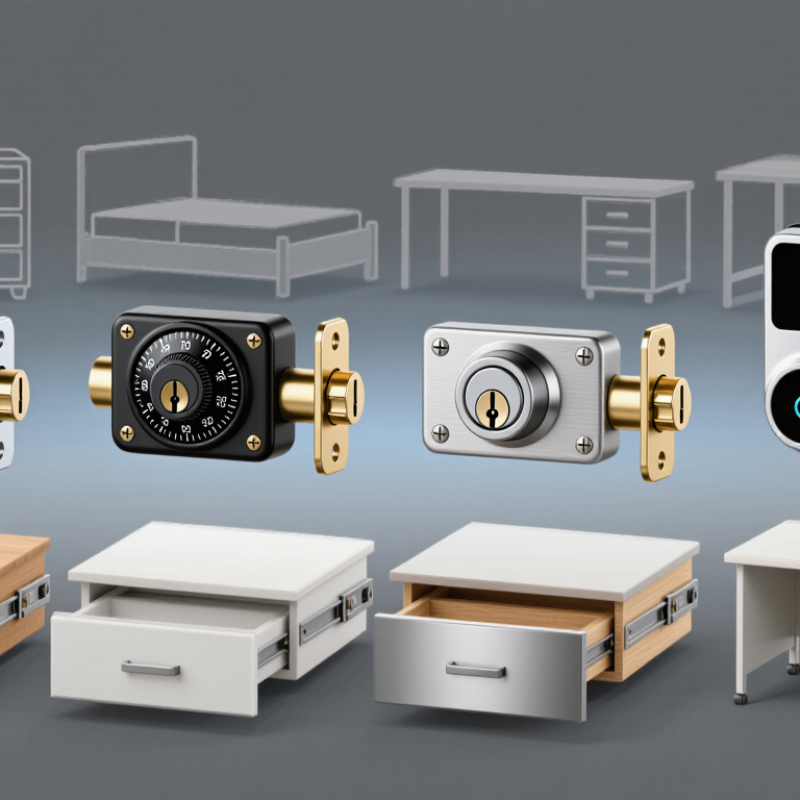
Choosing a drawer lock depends on access, appearance, and daily use. Cam locks are affordable and simple, with a key turning a metal arm behind the drawer. They suit desks, cabinets, and moderate-security storage. Tubular locks resist casual picking better, but their deeper cylinder needs accurate drilling. Disc locks offer a flatter profile and smooth operation, especially on narrow drawer fronts.
Combination locks remove the need for keys. They work well in shared offices, although forgotten codes create an awkward maintenance problem. RFID locks provide quick touch-based access and support controlled entry records. However, they need batteries and compatible access cards. Smart drawer locks can add phone control, alerts, and temporary permissions. Their convenience is impressive, but wireless features introduce more setup and failure points.
Tips: Measure the drawer thickness first. Check the lock’s backset and clearance before drilling. For kitchens or workshops, choose corrosion-resistant hardware and test the latch with the drawer fully loaded. Replace weak batteries early, not after a failed access attempt. I once underestimated a drawer’s internal divider; the lock fitted the face but could not turn properly. That small mistake changed the installation plan. Mechanical locks remain dependable, while electronic models deserve regular testing and a practical backup method.
What Are the 2026 Top Furniture Drawer Locks?
The strongest drawer locks are not judged by appearance alone. Their ASTM test data should show measured resistance against pulling, twisting, and forced impact. Ask for the applied force, test direction, fixture design, and failure point. A lock passing one strength test may still loosen under repeated use. The result needs context.
Corrosion resistance also deserves close attention. ASTM B117 salt-spray exposure can reveal rust risks on plated steel, springs, and internal pins. However, salt spray is not identical to a humid kitchen or coastal home. Look for exposure duration, surface condition, and post-test function. Cycle durability should report the number of complete locking and unlocking operations. It should also state the load used during cycling. A high cycle count sounds impressive, but poor installation can shorten real service life.
Tips: Compare complete reports, not isolated numbers. Check whether testing used assembled drawers. Inspect edges, screw holes, and latch alignment. A small gap can create stress. I would also test a sample manually before large-scale purchasing. Laboratory data guides decisions, but it cannot remove every uncertainty.
Evaluation note: ASTM B117 defines a salt-spray test practice, but it does not establish a universal pass/fail life for furniture locks. ASTM standards also do not specify one universal strength or cycle requirement for every drawer-lock design. The table therefore separates standardized test methods from project-defined acceptance criteria and uses representative engineering benchmarks rather than brand or company claims.
| Rank | Furniture Drawer Lock Type | Typical Security Design | Static Strength Test | ASTM-Linked Test Method | Recommended Proof-Load Benchmark* | Corrosion Test | Recommended Salt-Spray Benchmark* | Cycle-Durability Test | Recommended Cycle Target* | Best-Fit Application |
|---|---|---|---|---|---|---|---|---|---|---|
| 1 | Heavy-Duty Cam Lock | Metal cylinder with rotating cam and keyed or tubular operation | Resistance to cylinder pull-out, cam rotation, and housing deformation | ASTM F883 may be used as a padlock-performance reference; the drawer-lock fixture and load direction must be defined separately | ≥ 500 N axial pull-out; ≥ 10 N·m applied cam torque | Neutral salt spray exposure with visual corrosion grading | ≥ 96 h to ASTM B117; no functional seizure and no red rust on critical moving interfaces | Repeated lock, unlock, and drawer-open/close operation | ≥ 50,000 cycles with no loss of locking function | Commercial cabinets, office storage, tool drawers, and high-use furniture |
| 2 | Tubular-Key Cam Lock | Tubular pin mechanism with compact cam engagement | Cylinder retention, cam bending resistance, and mounting-nut stability | ASTM F883 reference testing can support mechanical-security assessment; drawer-specific loads remain project-defined | ≥ 350 N axial pull-out; ≥ 8 N·m cam torque | ASTM B117 neutral salt spray and post-test function check | ≥ 72 h; no seizure, key binding, or loss of cam engagement | Key insertion, rotation, withdrawal, and drawer actuation | ≥ 30,000 cycles | Retail fixtures, filing drawers, medium-duty storage, and public-use furniture |
| 3 | Push-Button Cabinet Lock | Push-to-lock latch with internal spring-loaded bolt or cam | Bolt shear resistance, latch retention, and release-button durability | ASTM F883 can provide a general mechanical-security reference, but no universal ASTM drawer-lock load is prescribed | ≥ 250 N direct pull; ≥ 5 N·m forced cam rotation | ASTM B117 exposure followed by latch-release and retention inspection | ≥ 48 h; release force remains within ±25% of the pre-test value | Button press, latch release, drawer movement, and relocking | ≥ 20,000 cycles | Residential furniture, bedside units, light-duty cabinets, and quick-access drawers |
| 4 | Electronic Solenoid Drawer Lock | Electrically released bolt controlled by keypad, RFID, or access system | Manual bolt force, enclosure retention, and fail-secure or fail-safe behavior | Mechanical strength is project-defined; ASTM B117 may be applied to exposed metal parts and enclosure hardware | ≥ 300 N bolt load without unintended release; electrical function retained after test | ASTM B117 for metal components; inspect contacts, fasteners, and bolt movement | ≥ 48 h; no corrosion-related electrical or mechanical failure | Authenticated release, bolt extension, relocking, and power interruption checks | ≥ 50,000 electrical cycles | Smart furniture, shared storage, hotel furniture, and controlled-access cabinets |
| 5 | Sliding-Bolt Furniture Lock | Manual bolt sliding into a keeper or reinforced strike plate | Bolt shear, strike-plate pull-out, and resistance to drawer-front deflection | Use a documented, fixture-based mechanical test; ASTM F883 is a reference only and is not a dedicated furniture-drawer standard | ≥ 200 N direct pull; ≥ 4 N·m applied torque | ASTM B117 exposure with visual rating and functional movement check | ≥ 48 h; bolt must fully extend and retract after exposure | Manual bolt extension and retraction under normal drawer alignment | ≥ 10,000 cycles | Basic home furniture, low-use drawers, and economical storage units |
Top furniture drawer locks should be judged against tip-over prevention, not convenience alone. ASTM F2057-23 generally covers clothing storage units over 27 inches tall. It addresses stability, drawer retention, interlocks, and safety warnings. It does not make a small lock a complete child-safety system. That distinction matters. The U.S. Consumer Product Safety Commission’s Furniture Tip-Over report estimated 71,700 emergency-department-treated injuries involving furniture, televisions, and appliances from 2018 through 2022. Children remain especially exposed when an open drawer becomes a climbing step.
A practical evaluation checks adhesive strength, screw retention, release resistance, and performance after repeated opening. Locks should resist a curious toddler, yet adults must release them without sudden force. Drawer gaps also matter.
A lock can fail when a unit is tall, top-heavy, poorly loaded, or left unattached. ASTM F2057-23 testing should therefore be read alongside anchoring instructions and the furniture’s actual dimensions.
That is where many buying guides feel incomplete. Lab claims cannot replace a careful room inspection.
CPSC findings support anchoring furniture to a wall, keeping heavy items low, and avoiding multiple open drawers. For a nursery or child’s bedroom, select a lock with clear installation tolerances and durable hardware. Test it monthly. Check loose screws, cracked plastic, and drawer alignment. A high-rated lock may still create false confidence if the dresser lacks compliant stability. That uncomfortable limitation deserves more attention.
For 2026, the strongest furniture drawer lock is not always the most expensive. A practical ranking weighs security, installation, cost, and certification together.
Electronic cabinet locks rank first for controlled access and audit functions. They offer strong resistance against casual opening, but installation needs wiring, battery planning, and accurate alignment.
Mechanical keyed cam locks rank second. They cost less, install quickly, and suit office storage, retail fixtures, and household drawers. Their security depends heavily on cylinder quality and mounting depth.
Basic push locks rank third. They are affordable and simple to fit, but they mainly prevent accidental opening. They are not suitable for valuable contents.
Grand View Research estimates the global furniture market reached about USD 766 billion in 2024, with continued growth expected through 2030. That expansion increases demand for hardware that survives frequent use. Buyers should compare cycle testing under ANSI/BIFMA X5.9, corrosion results under ISO 9227, and electrical safety evidence where applicable. A certification logo alone proves little. The certificate scope matters.
Tips: Measure the drawer panel first. Leave clearance for the latch body and strike plate. For electronic models, test low-battery access before installation. Request test reports, not marketing claims.
One weakness remains: furniture-lock standards are less uniform than door-lock standards. I would treat unsupported security ratings carefully. A neat product sheet can still hide weak screws, poor alignment, or a fragile housing.