Top 10 Essential Tips for Choosing Cabinet Drawer Locks Safely
Selecting the right Cabinet Drawer Locks is crucial for ensuring the safety and security of personal and sensitive items, especially in homes and workplaces. According to a recent survey by the Security Industry Association, nearly 70% of burglaries occur through unlocked doors and cabinets, highlighting the significant role of secure locking mechanisms. Notably, experts in the field stress the importance of high-quality locks for cabinets. As security specialist Dr. Emily Carter stated, “The efficacy of cabinet locks is directly linked to their design and material; choosing the right lock can deter theft and enhance safety.”
Moreover, the market for Cabinet Drawer Locks is projected to grow by 4.5% annually, driven by increasing awareness about safety and security in residential and commercial settings. Consumers are becoming more educated on the types of locks available, emphasizing the necessity for clear guidance in selecting the most effective options. With various designs, materials, and security features available, understanding the essentials of Cabinet Drawer Locks can empower individuals to make informed decisions, ultimately leading to enhanced peace of mind and protection of their valuables.
Top Security Features to Look for in Cabinet Drawer Locks
When selecting cabinet drawer locks, understanding the key security features can significantly enhance your safety and peace of mind. According to a report by the Security Industry Association, nearly 30% of households experience property theft, underscoring the importance of robust locking mechanisms. One essential tip is to consider locks with high pick resistance. Look for models that utilize dimple keys or have complex pin designs; these can deter common lock-picking methods, making unauthorized access considerably difficult.
Another critical feature to evaluate is the durability of the lock. A study published in the Journal of Security Technology found that locks made from hardened steel withstand physical attacks better than those made from weaker materials. Ensure that the locks you choose meet industry standards (such as ANSI/BHMA grades) to guarantee their strength and longevity. A lock with a solid bolt and anti-drill features adds an extra layer of protection, so prioritize these specifications when making a selection.
Finally, consider key control options. Utilizing locks that offer restricted key systems can help manage who has access to various cabinets. This feature is particularly essential in commercial settings, where sensitive materials are stored. By adopting these tips and focusing on security features, you can ensure that your cabinet drawers are well-protected against unauthorized access.
Top Security Features in Cabinet Drawer Locks
Understanding Different Lock Types: Keyed vs. Keyless Options
When selecting cabinet drawer locks, understanding the differences between
keyed and keyless options is crucial for ensuring security and convenience.
 Keyed locks offer a traditional approach, utilizing physical keys that provide an extra layer of protection against unauthorized access.
According to a report by the Security Industry Association, approximately 60% of consumers still prefer keyed locks due to their tangible security feature
and the sense of trust they instill. The downside is the potential for lost keys and
the need for replacements.
Keyed locks offer a traditional approach, utilizing physical keys that provide an extra layer of protection against unauthorized access.
According to a report by the Security Industry Association, approximately 60% of consumers still prefer keyed locks due to their tangible security feature
and the sense of trust they instill. The downside is the potential for lost keys and
the need for replacements.
On the other hand, keyless locks, which include electronic and combination types, are becoming increasingly popular due to their ease of use.
A survey conducted by Research and Markets indicates that the global smart lock market is expected to reach
$4.5 billion by 2025, reflecting a growing trend towards keyless security solutions.
These locks allow users to gain access through codes or mobile apps, making them ideal for shared spaces.
However, while they offer convenience, it’s essential to ensure the technology is robust, as vulnerabilities in digital locks can be exploited if not properly secured.
Material Matters: Choosing Durable and Weather-Resistant Locks
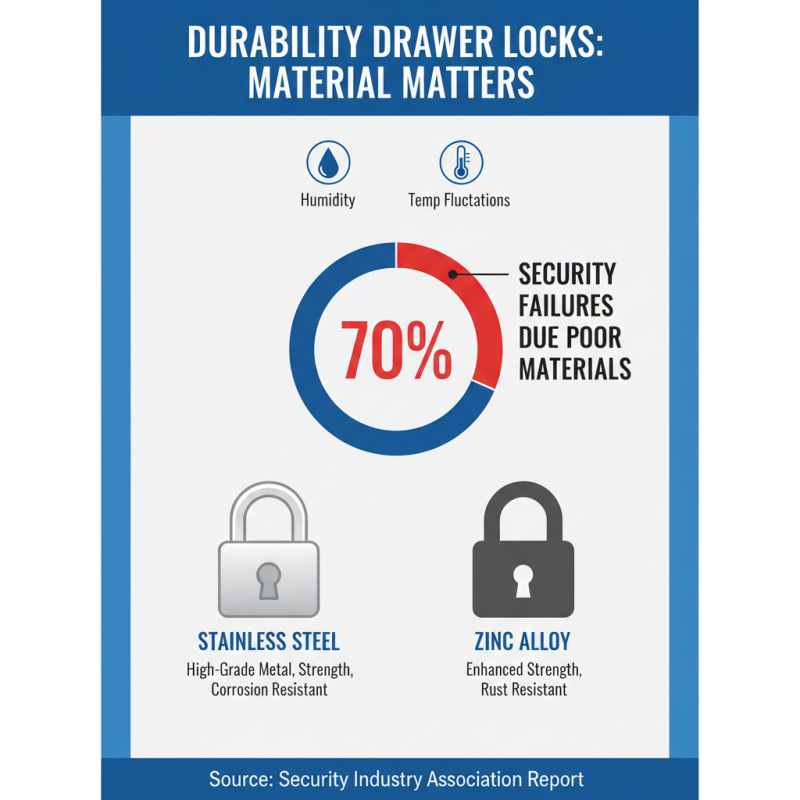
When selecting cabinet drawer locks, the material of the lock plays a critical role in ensuring durability and resistance to environmental factors. According to a report by the Security Industry Association, over 70% of security failures can be attributed to poor-quality materials. This statistic underscores the importance of choosing locks made from high-grade metals such as stainless steel or zinc alloy, which not only provide enhanced strength but also resist corrosion—a crucial feature for environments that experience humidity or temperature fluctuations.
In addition to metal selection, the weather resistance of the lock is paramount for ensuring longevity. The American National Standards Institute (ANSI) states that locks exposed to outdoor conditions should have a weather rating of at least IP65, meaning they are dust-tight and protected against water jets. This level of protection is essential for outdoor cabinets or those in garage environments. Investing in locks with weather-resistant features will not only enhance security but also reduce the need for replacements, ultimately proving to be more economical in the long run.
Assessing Lock Ratings: What Industry Standards to Consider
When choosing cabinet drawer locks, assessing lock ratings is crucial for ensuring safety and security. Various industry standards exist to guide consumers in selecting the appropriate locks. Look for locks that comply with the American National Standards Institute (ANSI) specifications, which classify locks based on their durability and resistance to unauthorized entry. Locks rated by ANSI offer a guideline for quality, with higher ratings typically indicating superior longevity and security features.
Another important consideration is the Underwriters Laboratories (UL) certification, which evaluates locks for fire safety and general security. UL-rated locks undergo rigorous testing for heat resistance and structural integrity, providing peace of mind in the event of a fire. By prioritizing these ratings, homeowners can make informed decisions that enhance the safety of their cabinet drawers while protecting their valuables.
Installation Tips for Maximizing Security and Functionality in Cabinets
When it comes to securing your cabinets, proper installation of drawer locks is paramount. According to the National Institute of Standards and Technology (NIST), over 30% of home burglaries involve forced entry through unsecured cabinets and drawers. To enhance security, it is vital to install locks that not only fit well but also offer strong resistance against tampering. A study by the Security Industry Association (SIA) emphasizes that a significant portion of successful break-ins can be thwarted with high-quality locks that are expertly installed.
Begin by selecting the right type of lock for your cabinet. Deadbolt locks are often recommended for their robustness and resistance to picking, while cam locks can provide a good balance of security and convenience for lighter applications. Ensure that the locking mechanism is properly aligned with the latch for optimal performance. The NIST recommends using a lock with a grade of at least one to ensure superior resistance to unauthorized access.
In addition to choosing the right lock, it's essential to follow best practices during installation. The lock should be placed at a height that is both functional and out of reach of children or potential intruders. Furthermore, reinforcing the cabinet structure around the lock can add an extra layer of security. Regular maintenance checks on the locks and hinges can also prevent wear and ensure that the security measures remain effective over time. By paying close attention to these details, you can significantly enhance the security and functionality of your cabinet drawers.
Top 10 Essential Tips for Choosing Cabinet Drawer Locks Safely
| Tip Number |
Tip Description |
Security Level |
Installation Complexity |
| 1 |
Choose high-quality materials for durability. |
High |
Low |
| 2 |
Consider the type of lock mechanism. |
Medium |
Medium |
| 3 |
Check for certifications and standards compliance. |
High |
Low |
| 4 |
Ensure the lock fits your cabinet's design and style. |
Medium |
Low |
| 5 |
Think about whether you need keyed or keyless options. |
Medium |
Medium |
| 6 |
Evaluate additional features like alarm systems. |
High |
High |
| 7 |
Review installation guides and user reviews for insights. |
Medium |
Low |
| 8 |
Select a lock that allows easy access for authorized users. |
Medium |
Low |
| 9 |
Assess the lock’s resistance to forced entry. |
High |
Medium |
| 10 |
Consider the warranty and customer support options. |
Medium |
Low |