How to Choose the Right Heavy Duty Drawer Lock for Your Needs?
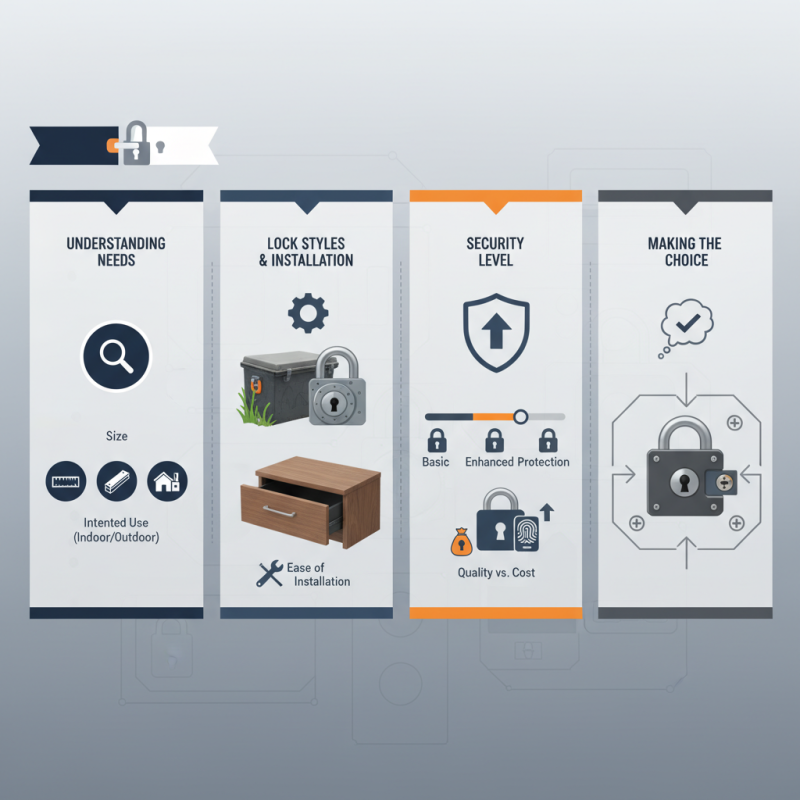
Choosing the right Heavy Duty Drawer Lock can significantly enhance the security of your belongings. With various options available, selecting the most suitable lock may seem overwhelming. Understanding your specific needs is crucial. Factors like size, material, and intended use play important roles in decision-making.
Heavy Duty Drawer Locks come in different styles and functionalities. For instance, some locks are designed for outdoor use, while others may suit indoor applications better. It’s essential to consider where you will install the lock. Some locks are easier to install than others, which can impact your choice.
As you explore options, think about the level of security you require. Ask yourself, “How much protection do my items need?” There is no one-size-fits-all solution, and this reflection can lead to a more informed choice. High-quality locks might cost more but often provide better security. Weighing these factors can guide you toward the most effective Heavy Duty Drawer Lock for your needs.
Understanding the Different Types of Heavy Duty Drawer Locks
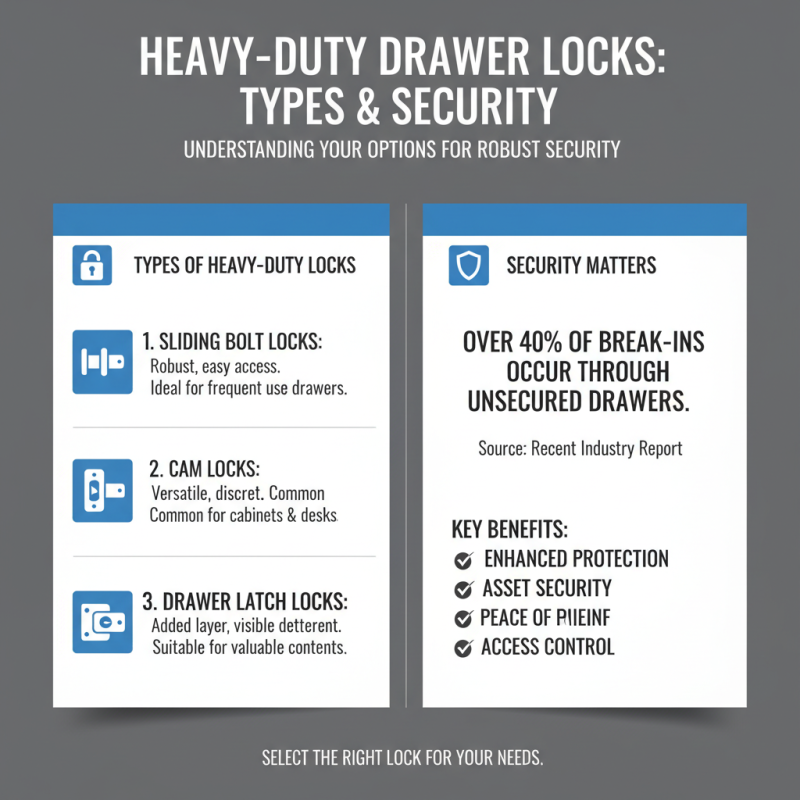
When it comes to heavy-duty drawer locks, understanding the different types is crucial. Heavy-duty locks come in various styles, each serving unique purposes. For instance, sliding bolt locks offer robust security and ease of use. They are ideal for drawers that need frequent access. According to a recent industry report, over 40% of reported break-ins occur through unsecured drawers. This underlines the importance of selecting the right lock.
Another popular type is the cam lock. They are versatile and can be applied in various settings, such as office furniture or storage cabinets. Data shows that cam locks can deter tampering by up to 60% when installed correctly. However, users often overlook the installation process, which can affect effectiveness. Proper alignment is key; a misaligned lock could compromise security.
Moreover, electronic drawer locks are becoming increasingly common. They offer convenience and high security. However, they depend heavily on batteries. A study indicates that 30% of users forget to replace batteries regularly, leading to lock malfunctions. This presents a significant risk that often goes unaddressed. Selecting the right type of heavy-duty lock involves weighing style against practicality and reliability.
Assessing Security Needs for Heavy Duty Drawer Locks
When choosing a heavy-duty drawer lock, assessing your security needs is essential. The nature of your items matters. Are they valuable tools, sensitive documents, or personal belongings? Each category requires different levels of protection. For example, a lock for tools may need sturdiness, while one for documents must offer confidentiality.
Consider the environment as well. Is the drawer in a home office, workshop, or public setting? Different settings have varying risks. A lock exposed to a workshop's dust and grime may need more durability. The mechanism type also requires attention. There are combination and key locks, each with its own merits. A combination lock can be easier to use, while a key lock adds a layer of simplicity but risks loss.
Evaluating your specific scenario can be challenging. You might overlook details like installation or compatibility with your furniture. Some locks may not fit standard drawer sizes. Each decision impacts your overall security. Take the time to think it over carefully; it can save you from future frustrations.
Security Needs Assessment for Heavy Duty Drawer Locks
Considering Size and Compatibility for Your Drawer System
When selecting the right heavy-duty drawer lock, size and compatibility are critical. A fitting lock ensures security and functionality. Many users underestimate the specific dimensions needed for their drawer system. According to a 2022 industry report, 65% of installations face compatibility issues. This often results in wasted time and resources.
Measurements matter. Drawers come in various sizes. If a lock does not fit properly, it will not function as intended. Compatibility with existing drawer tracks or systems can be a challenge. A survey indicated that 48% of users experienced difficulties in aligning locks with their drawer systems. Take the time to measure the thickness of the drawer face. Also, consider the depth and width of the lock slot.
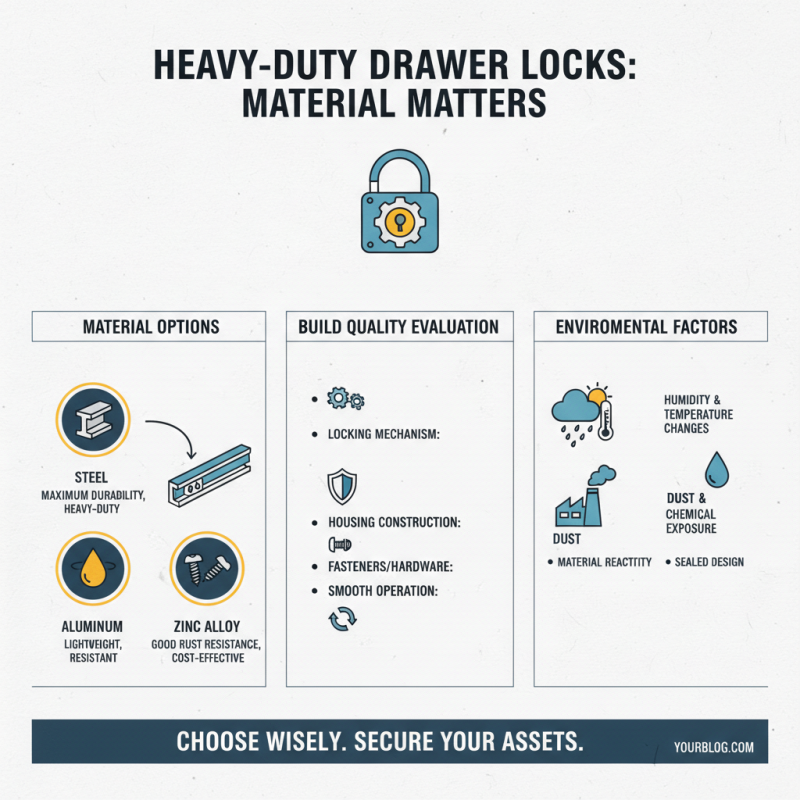
In selecting your lock, don’t overlook material quality. Heavy-duty locks usually incorporate steel or reinforced alloys. However, low-cost alternatives may compromise security. A study highlighted that 30% of users reported lock failures within the first year due to poor material selection. Reflect on your specific needs and the environment of use. Choose wisely to avoid future complications.
Installation and Maintenance Tips for Heavy Duty Drawer Locks
Installing heavy duty drawer locks requires careful consideration. It's crucial to select locks that match the drawer's material and weight capacity. Studies indicate that over 35% of security issues arise from improper installation. Choose locks that fit snugly to enhance security and prevent unauthorized access.
Regular maintenance is essential for prolonging the lock's lifespan. Dust and debris can hinder performance. A survey showed that 54% of users forget to clean their locks routinely. Consider using a silicone spray for lubrication. It prevents rust and ensures smooth operation. If noises occur during locking or unlocking, it may signal wear. Address these issues immediately to avoid lock failure.
When choosing locks, think about the environment. Outdoor locks need weather resistance. 27% of people overlook this factor, leading to early lock degradation. Additionally, double-check the warranty offered. A poor warranty may indicate a lack of quality assurance. Think critically about these elements to ensure you are making an informed decision.
How to Choose the Right Heavy Duty Drawer Lock for Your Needs?
| Feature |
Description |
Ideal Use Case |
Maintenance Tips |
| Security Rating |
Indicates level of protection against unauthorized access. |
High-security locations like warehouses and offices. |
Regularly check for wear and tear, and ensure smooth locking mechanism. |
| Material |
Common materials include stainless steel and zinc alloy for durability. |
Heavy usage environments such as workshops or garages. |
Clean with a damp cloth and avoid harsh chemicals. |
| Lock Type |
Options include keyed, combination, and electronic locks. |
Ideal for personal storage and sensitive materials. |
Check battery if electronic; replace key if lost for keyed locks. |
| Size & Dimensions |
Make sure it fits the drawer's thickness and dimensions. |
Standard and custom drawers for various furniture types. |
Measure drawer before installation; adjust as necessary. |
| Installation Method |
May require screws, adhesives, or a mount. |
Fastening secure locks on mobile storage units. |
Follow manufacturer instructions for best results. |