Signature Products, Unmatched Quality

  • yx
  • yx
  • whatsapp
  • Twitter
  • Facebook
Leave Your Message

2026 Top Drawer Lock Types for Global Buyers

A drawer can look secure and still open with a light pull. The right Drawer Lock depends on more than appearance. Buyers must weigh drawer material, installation depth, key control, operating frequency, and the value of the contents. A compact cam lock may suit a shallow office pedestal. A central locking system may better serve a cabinet with several drawers. Small details matter.

This overview uses a fictional technical reviewer, cabinet-hardware consultant Daniel Wu, to frame a practical rule: “Choose the lock for the drawer’s structure and daily use, not just its listed security level.” This is an illustrative quote, not a verified statement from a real industry professional. It reflects a useful selection principle: check the lock body, fastener reach, cylinder rotation, and clearance behind the drawer front before comparing prices. A measurement taken at the workbench can prevent a poor fit later.

Global buyers also need clear product data. Ask suppliers for material specifications, finish options, installation dimensions, keying choices, and sample testing details. Compare mechanical, combination, and electronic types against the actual use case. No lock is perfect. A low-cost model may be adequate for routine access control, but unsuitable for frequent use or heavier drawers. This guide examines common Drawer Lock types, their trade-offs, and the questions worth asking before placing an order.

2026 Top Drawer Lock Types for Global Buyers

Understanding Drawer Locks and Their Core Components

A drawer lock is a small assembly, not just a keyhole. In a common cam lock, the key turns a plug inside the cylinder. That movement rotates a flat cam behind the drawer front, holding the drawer shut. The housing supports the cylinder, while a retaining nut secures it to the panel. Some installations also use a keeper or strike plate. Fit depends on drawer thickness, available clearance, and cam length.

Cabinet upgrades make these details relevant to buyers and project planners. The 2024 U.S. Houzz & Home Study reported a median home renovation spend of $24,000 for surveyed homeowners in 2023. The report does not measure drawer-lock demand, but it shows the scale of renovation spending where cabinet hardware may be specified. A useful selection note should list cylinder diameter, body length, panel thickness, cam shape, and keying requirements. These are easy to overlook.

Tips: Measure the drawer front before ordering. Check that the cam clears internal rails and reaches the frame. Test the lock with the drawer closed; a lock that turns freely may still fail to engage. Small parts matter. Houzz & Home Study, 2024.

2026 Top Drawer Lock Types for Global Buyers — Understanding Drawer Locks and Their Core Components

How to read this chart: 0 means the typical lock operates mechanically without electrical power; 1 means it typically requires electrical power. Keyed cam and mechanical combination locks use mechanical components such as a key cylinder or combination mechanism and a cam or bolt. Keypad and RFID locks typically use electronic components and a battery. Designs vary by product.

Comparing Keyed, Cam, and Combination Drawer Locks

2026 Top Drawer Lock Types for Global Buyers
Comparing Keyed, Cam, and Combination Drawer Locks

Keyed locks are straightforward: turn the key, and the cam behind the drawer front rotates to secure it. They suit shared offices or storage where a responsible person can manage keys. Cam locks are a common format, but “cam” describes the locking mechanism, not the keying method; many are keyed. Combination locks avoid loose keys, though forgotten codes can slow access. Small detail, big difference.

Tips: Check drawer-panel thickness, cam length, rotation angle, and clearance before ordering. Test a sample on the actual drawer. A lock that fits the hole may still catch on a rail or divider.

For global purchasing, compare how each option handles daily use, not just its listed security level. Keyed models are familiar but require key control and replacement planning. Combination models reduce key handling, yet users may need clear code-setting instructions. Check materials and finish against the drawer’s environment, especially where moisture or frequent cleaning is expected. Specifications do not tell the whole story; a rushed installation can leave even a suitable lock feeling awkward. There is no universal winner, and that can make selection less tidy than a product chart suggests.

Exploring Electronic and Smart Drawer Lock Types

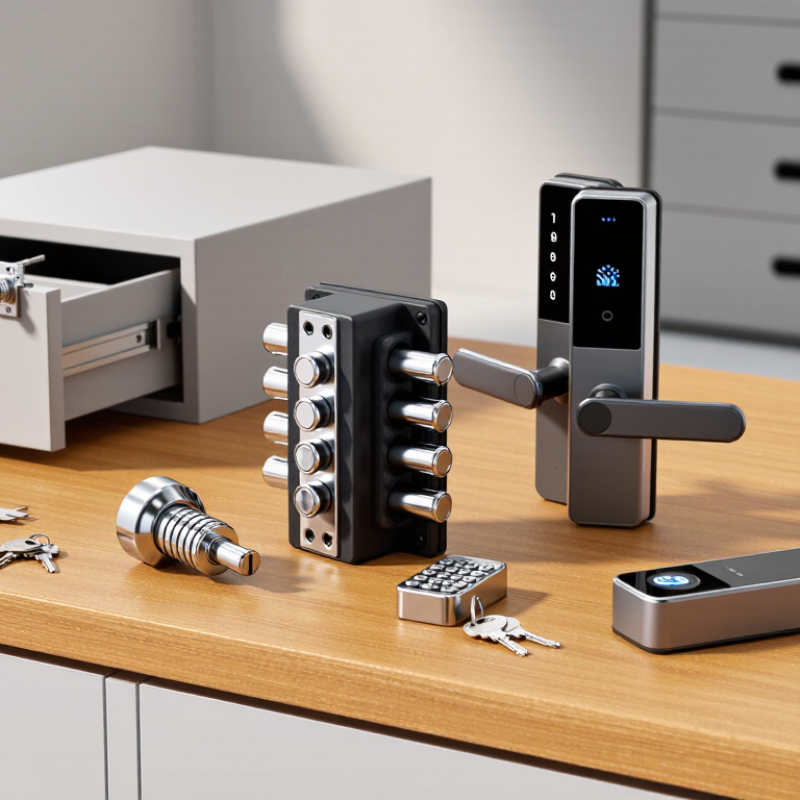
Electronic and smart drawer locks suit offices, hotels, retail counters, and shared workspaces. Keypad models use a PIN and work without cards or phones. They fit drawers used by rotating staff, though PINs can be shared or forgotten. RFID locks open with a card or key fob. A quick tap is convenient when hands are full. Buyers should check card compatibility and reader placement before ordering.

Biometric locks identify a registered fingerprint, which can make access feel direct and personal. They may be less reliable with wet, dusty, or worn fingertips. Bluetooth-enabled locks pair with a phone and may support temporary access or usage records. Useful, but not magic. Check whether the lock needs a network connection, how updates are handled, and what happens when a phone battery dies. Some electronic cam locks use a motor or solenoid to release the drawer bolt; the drawer’s alignment and load still matter.

For global purchasing, confirm drawer thickness, bolt travel, battery type, and installation clearances with a sample unit. A lock that fits a product drawing may bind on a real drawer. Ask about low-battery warnings and a controlled backup method, such as an override key or external power contact. Test repeated opening, not just one successful unlock. Materials, humidity, and daily use can expose weaknesses that a showroom demo misses.

Matching Lock Types to Drawer Uses and Security Needs

A suitable drawer lock depends on what the drawer holds, how often it is used, and who needs access. A cam lock is a practical choice for a desk pedestal or small cabinet. Its rotating metal cam catches behind the drawer front, keeping the drawer closed without a complex mechanism. For wider cabinets with several drawers, a central locking system can secure multiple drawers with one key turn. Check that the cabinet’s construction supports the locking bar.

High-use drawers need locks that are easy to operate and maintain. A push-button lock may suit shared office storage, while an electronic lock can help manage access without distributing physical keys. These options still need suitable installation and battery checks. For tools or valuable equipment, consider the drawer material, lock strength, and how firmly the unit is anchored. A strong lock on a thin drawer front may offer less protection than expected. Fit matters.

Tips: Measure the drawer front and internal clearance before selecting a lock. Test the key or code with the drawer both open and closed. Keep a spare key or documented access method in a secure place. If a lock catches or feels loose, pause and adjust it; forcing it can damage the drawer.

Checking Global Standards, Materials, and Installation Requirements

Global buyers should compare drawer locks by test standard, not finish alone. Mechanical pin-tumbler and wafer locks suit many steel or timber drawers; electronic models need power and service access. For corrosion exposure, EN 1670:2007 classifies building hardware across five resistance grades, with neutral salt-spray exposure ranging from 24 to 480 hours. ISO 9227 defines the salt-spray test method, but its results do not predict years of service in a real room. A shiny sample can still disappoint near a damp loading bay.

Fit matters just as much. Measure the drawer-front thickness, lock-body depth, cam length, and clearance behind the drawer before ordering. A cam that is too short may not catch; one that is too long can foul the cabinet frame. ANSI/BHMA A156.11 covers cabinet locks and latches, offering buyers a useful reference for performance evaluation. Ask suppliers for the exact edition and test documentation, then match the lock to the intended material and duty. Check hole diameter and key rotation on a physical sample. Small differences matter. Installation sheets are sometimes vague, and that is worth challenging before shipment.

2026 Top Drawer Lock Types for Global Buyers — Checking Global Standards, Materials, and Installation Requirements

Comparison guide for common drawer-lock formats. Dimensions and suitability vary by product and application; verify the lock’s drawing, fixing method, and applicable local requirements before ordering.

Lock type How it works Typical applications Common materials Installation checks Standards and compliance considerations
Cam lock A key turns a rear-mounted cam to engage or release a cabinet frame, drawer body, or strike. Office furniture, cabinets, storage units, and single drawers. Brass or zinc-alloy lock body; steel or zinc-alloy cam; steel fasteners. Check panel thickness, mounting-hole diameter, lock-body length, cam length and offset, and clearance behind the drawer front. Confirm the cam reaches a suitable strike point. Often sold as a furniture lock rather than a building-door lock. Do not assume building-lock standards apply; request the manufacturer’s test and material information for the intended use.
Plunger lock A spring-loaded bolt or pin moves into a strike when the drawer is closed; key operation retracts it. Desk drawers and furniture systems where the locking point is set behind the drawer front. Steel or zinc-alloy housing and bolt; brass or steel internal components. Align the bolt with the strike, check the drawer’s closing travel, and allow enough space for the bolt to retract fully. Confirm whether the lock is designed for a left- or right-hand installation. Confirm the product’s stated operating and durability performance. Building-door lock standards are not automatically applicable to furniture locks.
Deadbolt drawer lock A key-operated bolt extends into a keeper or cabinet frame rather than relying only on a rotating cam. Drawers or cabinets needing a more positive mechanical engagement than a basic cam arrangement. Steel bolt and keeper are common; housings may use steel, brass, or zinc alloy. Check bolt throw, keeper position, front-panel thickness, and the strength of the mounting surface. Ensure the bolt does not bind when the drawer or cabinet shifts slightly. Check the specified load, cycle, and security performance for the application. EN 12209 concerns mechanically operated locks and latches for building applications; it should not be treated as a general furniture-lock approval.
Wafer-tumbler keyed lock Flat wafers inside the cylinder align at the shear line when the correct key is inserted, allowing the plug to turn. High-volume furniture and cabinet applications where a compact keyed mechanism is suitable. Brass or zinc-alloy cylinder components; steel or nickel-silver keys may be used, depending on the product. Check key direction, cylinder length, mounting method, and whether the lock supports the required keying arrangement. Confirm that replacement keys can be supplied if needed. Ask for details of key control and tested performance where security is important. EN 1303 applies to building-lock cylinders within its scope, not automatically to every furniture cylinder.
Pin-tumbler cylinder lock Key cuts position pin stacks so the plug can rotate and operate a cam or bolt. Furniture and storage applications where a cylinder-based keyed mechanism is specified. Brass is common for cylinder components; steel or other metals may be used for the cam, housing, and keys. Verify cylinder format and dimensions, fixing arrangement, cam or bolt compatibility, key rotation, and available space behind the panel. Check whether the exact cylinder and end use fall within any cited standard’s scope. EN 1303 classifies building-lock cylinders; a claim should be verified for the specific product.
Central locking system A central mechanism, rod, or linkage locks multiple drawers from one control point, often with a separate lock cylinder. Multi-drawer desks, filing furniture, and cabinets designed for coordinated locking. Steel rods and linkages; steel, brass, or zinc-alloy lock components; polymer guides may be used. Check cabinet width and drawer layout, rod travel, linkage alignment, drawer sequence, and whether opening one drawer affects another. Install and adjust the complete system as a set. There is no single universal furniture standard covering every central-locking design. Obtain the system’s installation instructions and application-specific test information.
Electronic keypad or credential lock An electronic control releases a latch or bolt after a valid code or credential is presented. Shared-use storage, workplace furniture, and applications needing managed access rather than a conventional key. Metal latch and housing components; electronic circuit boards; batteries and polymer parts may be included. Check cut-out dimensions, power source, battery access, emergency override, user-management method, and the effect of metal furniture on wireless credentials. Confirm the lock remains accessible for maintenance. For products sold in regulated markets, confirm which electrical, radio, chemical, and product-safety rules apply to the specific model. CE marking is required only where applicable EU legislation requires it; RoHS applies only to equipment within its scope.
Push-button or mechanical combination lock A preset button sequence or mechanical combination releases the latch without a conventional keyed cylinder. Personal storage and furniture where key-free access is preferred. Steel or zinc-alloy mechanism and housing; polymer buttons or knobs may be used. Confirm the required mounting orientation, panel thickness, latch engagement, reset procedure, and access to the combination-change mechanism. Check the stated combination capacity and operating instructions. Security and durability claims should be supported by product-specific evidence rather than assumed from the lock type.
Hasp or staple with padlock A hasp pivots or folds over a staple, which is secured with a separate padlock. Utility cabinets, workshop storage, and applications where the user supplies or changes the padlock. Steel or stainless steel hasp and staple; padlock materials vary by model and environment. Check screw or bolt strength, mounting-surface thickness, staple clearance, padlock shackle size, and whether the hasp can be reached or pried from the outside. Specify corrosion resistance for the actual environment. ISO 9227 describes salt-spray testing methods; it does not by itself set a universal pass level for every product.