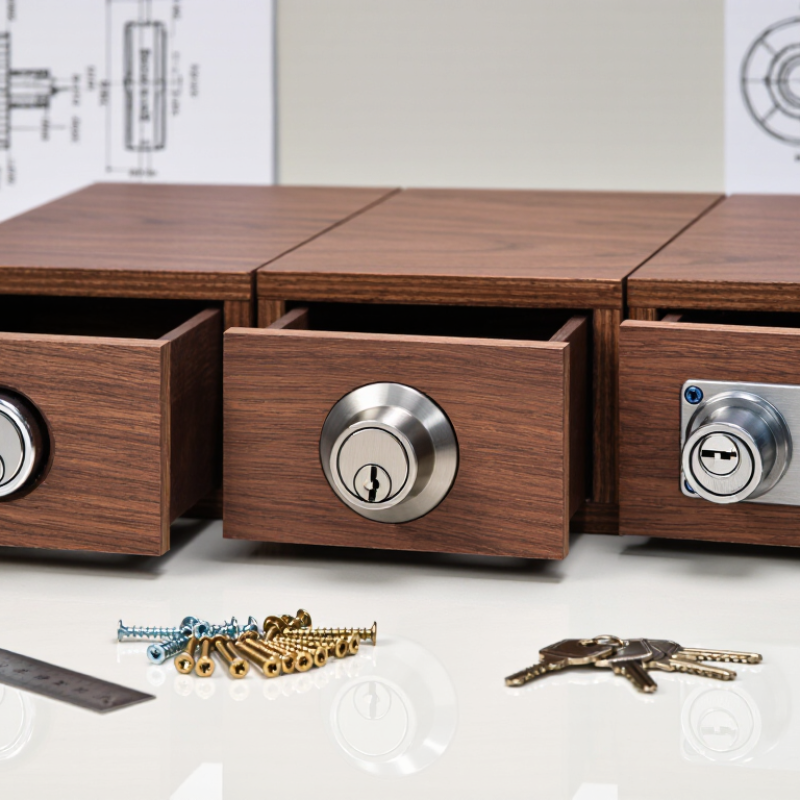
Choosing the right Furniture Drawer Locks in 2026 requires more than comparing prices or polished product photos. Global buyers must examine security, drawer construction, corrosion resistance, key control, and installation consistency. A lock that performs well in a showroom may fail after repeated use, rough shipping, or humid storage conditions.
Locksmith author Graham Pulford offers a useful principle: “A lock is only as reliable as its installation.” That warning matters for furniture manufacturers, distributors, hotel suppliers, and project buyers. A concealed cam lock may suit office pedestals, while a push lock may work better on compact drawers. Metal thickness, cylinder length, cam rotation, and fixing-hole accuracy can change the result. Small details matter.
This guide reviews leading Furniture Drawer Locks for international purchasing decisions. It considers zinc alloy and stainless-steel bodies, keyed-alike options, master-key systems, child-resistant designs, and replacement-key management. It also looks at packaging labels, technical drawings, sample testing, and supplier communication. These practical points often decide whether a bulk order runs smoothly.
No ranking is perfect.
Buyer priorities differ. A luxury cabinet brand may value appearance and quiet operation. A workshop may need fast installation and low replacement costs. A hospitality project may require controlled access across hundreds of drawers. The strongest choice balances security, serviceability, supply reliability, and verified performance. Still, specifications can never replace hands-on testing. Order samples, measure the drawer panels, and test the lock under realistic use before approving a large shipment.
Furniture Drawer Locks: Purpose, Types, and Core Security Features
A drawer lock does more than prevent casual opening. It protects documents, medication, tools, and personal belongings from quick access. In offices and homes, the lock also supports privacy. Small detail. Yet placement matters as much as the cylinder.
Common types include cam locks, push locks, sliding bolt locks, and electronic cabinet locks. Cam locks suit metal or wooden drawers and offer simple key operation. Push locks can reduce visible hardware on clean furniture fronts. Sliding bolts provide a sturdy mechanical option, but they need accurate alignment. Electronic versions may use codes, cards, or wireless control. They add convenience, although batteries and software create new maintenance points.
Core security features include hardened components, concealed fixing screws, anti-pick construction, and controlled key duplication. A good lock should resist forced twisting without damaging the drawer. Check mounting depth, material thickness, key rotation, and replacement parts before ordering. Fit matters. During product checks, I would test repeated opening cycles, loose drawer movement, and humid storage conditions. One overlooked gap can weaken an otherwise strong system. No lock removes every risk. That is worth admitting. Some electronic models look advanced but fail when batteries are ignored. Buyers should compare tested performance, installation quality, service documentation, and applicable regional safety requirements.
For global buyers choosing furniture drawer locks in 2026, appearance is only the starting point. Assess the drawer material, wall thickness, and available clearance before reviewing supplier catalogs. A lock designed for steel may sit poorly in engineered wood. Measure twice. Small errors can cause binding, uneven alignment, or damaged surfaces during installation.
Security needs also depend on use. Office storage, hotel furniture, medical cabinets, and household drawers may require different resistance levels and key control. Examine cylinder construction, fastening strength, and resistance to corrosion. Humid coastal regions can expose weak finishes quickly. Dry, dusty environments create different problems. Ask for material specifications, quality-control records, and relevant test reports instead of relying on product photos. Documentation matters.
Installation should be checked with real drawer samples, not only digital drawings. Confirm the lock body fits behind the drawer front and allows smooth movement after fastening. Packaging should protect small parts from scratches and loss during international transport. Clear instructions reduce mistakes for installers who speak different languages. A polished finish can hide a weak mechanism, so visual quality must remain secondary. No checklist is perfect. Rechecking tolerances after installation is still worthwhile. Availability of replacement keys, compatible components, and consistent production should also influence the purchasing decision.
This buyer-oriented scoring model prioritizes the criteria that should be checked before selecting drawer locks for international furniture projects. Security performance, material durability, installation compatibility, and compliance should be verified against the supplier’s technical documents and applicable standards.
In 2026, furniture drawer locks should be selected by application, not appearance alone. Cam locks suit office pedestals, filing cabinets, and wooden drawers with limited daily access. Their rotating metal cam is simple, durable, and easy to service. For retail counters, push locks offer quick operation and a cleaner front panel. They work best when drawer alignment remains precise.
Electronic keypad locks fit shared workspaces, hospitality furniture, and storage units requiring controlled access. Some models support temporary codes, audit records, or emergency power connections. However, battery life and override procedures deserve careful testing.
Sliding-door cabinets may need hook locks or recessed systems, especially when the door overlaps the frame. Glass furniture requires specialized clamps or surface-mounted locks that avoid drilling damage. Small details matter.
For residential drawers, child-resistant mechanisms can reduce accidental opening, but installation quality still decides performance. Buyers should check panel thickness, lock rotation, corrosion resistance, key management, and replacement parts before placing large orders. A lock that feels strong in a sample may loosen after repeated use. This is easy to overlook. In my experience, pilot testing with real drawers reveals problems that product sheets hide. Regional safety expectations and furniture construction also vary, so suppliers should verify applicable requirements before production. No category is perfect; the practical choice balances security, access speed, maintenance, and installation limits.
2026 Top Furniture Drawer Locks for Global Buyers?
International buyers should treat drawer locks as engineered components, not simple accessories. Confirm applicable ISO, EN, or regional testing requirements before purchase. Requirements may cover cycle durability, corrosion resistance, flammability, and material safety. A test report should identify the exact lock model and test method. Generic certificates create uncertainty.
Material selection affects service life. Zinc alloy suits many indoor drawers and offers practical strength. Stainless steel performs better in humid kitchens, workshops, and coastal areas. Brass provides a traditional appearance, while reinforced nylon can reduce weight. Installation depends on panel thickness, drilling diameter, cam rotation, and rear clearance. Check these dimensions against the drawer box, face frame, and cabinet construction. Small errors matter. A lock may turn smoothly but still fail to secure an uneven drawer.
Tips: Measure twice before ordering. Request installation drawings, tolerance data, and sample units. Test several opening cycles with the actual drawer hardware. Compatibility also includes key operation, replacement access, and left- or right-hand fitting. I have seen buyers approve a lock after checking only the hole diameter. That was not enough. In one case, the cam touched the drawer runner and prevented full closure. A pilot installation could have revealed it earlier. Suppliers should document inspections, packaging protection, and traceability for each production batch.
| Lock Type | Typical Application | Common Materials | Typical Dimensions and Fit | Installation Requirements | Security and Operating Features | Relevant Standards or Tests | Global Buyer Compatibility Checks |
|---|---|---|---|---|---|---|---|
| Cam Lock | Office pedestals, wooden cabinets, nightstands, and general-purpose drawers. | Zinc alloy or steel body; stainless steel or plated steel cam and cylinder components. | Many furniture cam locks use a 16–22 mm nominal mounting-hole range; exact dimensions vary by design. Cam length and rotation angle must match the cabinet wall and keeper position. | Requires a correctly sized circular bore, access to the rear of the panel, and sufficient clearance for the rotating cam. | Key-operated locking, usually 90° or 180° rotation; suitable for basic privacy and document control rather than high-security protection. | Check applicable furniture-hardware performance requirements, corrosion testing such as ISO 9227 or ASTM B117, and chemical compliance under REACH and RoHS where required. | Confirm hole diameter, panel thickness, cam offset, key removal position, finish, handedness, and replacement-key availability. |
| Tubular or Pin-Tumbler Cylinder Lock | Higher-use office furniture, filing cabinets, storage drawers, and multi-drawer units. | Brass, zinc alloy, stainless steel, or hardened steel internal components; nickel, chrome, or other protective finishes may be used. | Cylinder length must suit the panel thickness and mounting nut. The bolt or cam throw must align with the strike or locking bar. | Needs accurate drilling or a prepared mounting hole. The rear mechanism must not interfere with drawer runners, dividers, or adjacent drawers. | Greater resistance to casual picking and forced rotation than simple wafer mechanisms, depending on cylinder design and material quality. | Where a security classification is claimed, request test evidence against the specific applicable standard; do not assume a furniture cylinder meets building-door lock standards. | Verify key profile, cylinder diameter, fixing method, bolt travel, master-key requirements, and local restrictions on key-control systems. |
| Sliding Bolt or Push-Button Lock | Small drawers, bedside cabinets, lightweight storage, and applications requiring quick access. | Zinc alloy, steel, stainless steel, engineering plastics, or combinations of these materials. | Usually surface-mounted or installed through a small prepared opening; bolt length must accommodate the keeper gap without binding. | Requires a flat mounting surface and accurate keeper alignment. Screws must be suitable for the substrate, such as solid wood, MDF, particleboard, or metal. | Simple operation and low installation complexity; generally provides privacy or basic deterrence, not strong forced-entry resistance. | Review applicable furniture-hardware durability and corrosion requirements; ISO 9227 or ASTM B117 may be specified for salt-spray evaluation. | Check mounting screw pattern, keeper type, substrate strength, required operating force, and whether the lock is suitable for left- or right-hand installation. |
| Central Locking System | Pedestals and filing cabinets where one cylinder controls two or more drawers. | Steel locking bars, zinc alloy or brass cylinder, steel guides, and plated or coated hardware. | Requires cabinet-specific vertical spacing, bar length, guide positions, and drawer-front geometry. It is rarely a universal drop-in replacement. | Installation involves positioning the cylinder, connecting the locking bar, fitting guides, and confirming that all drawers are closed before locking. | Locks multiple drawers simultaneously and can support anti-tilt interlocking when designed as part of the cabinet system. | Request durability, load, and anti-tilt test documentation where safety is important. Applicable furniture safety requirements depend on the cabinet type and market. | Confirm number of drawers, center-to-center spacing, bar travel, cabinet depth, keying system, and compatibility with existing drawer runners. |
| Combination Lock | Personal storage, lockers, office drawers, and situations where users should not carry keys. | Zinc alloy or steel housing, stainless steel or plated wheels, and polymer components for dial operation. | Available as cam, bolt, or surface-mounted formats. Mounting-hole size, panel thickness, and cam profile must be checked carefully. | Requires accurate alignment and adequate rear clearance. Resettable models may require access to the rear or an authorized reset procedure. | Keyless operation and code convenience; code capacity and resistance to manipulation vary by mechanism. | Check mechanical durability and corrosion test reports. A combination lock should not be marketed as a certified high-security product without relevant test evidence. | Confirm code-reset method, emergency override policy, operating temperature, dial visibility, and suitability for shared or assigned storage. |
| RFID or NFC Electronic Lock | Shared offices, hospitality furniture, smart lockers, and controlled-access storage. | Zinc alloy or engineering-plastic housing, steel or stainless-steel latch parts, electronic control board, battery contacts, and polymer seals. | Requires a compatible mortise, cam, latch, or rear-mounted actuator. Battery compartment and reader orientation must fit the furniture design. | Needs correct battery installation, latch alignment, programming, and a defined emergency-opening method. Metal panels can affect radio performance. | Contactless credential use, audit or access-management options, and low-voltage battery operation may be available depending on the system architecture. | IEC 60529 may be relevant where an IP rating is claimed; radio equipment may require regional approval, such as applicable CE, UKCA, FCC, or ISED requirements. | Check frequency, credential technology, encryption claims, battery life, low-battery behavior, app or gateway requirements, regional radio approvals, and data-security responsibilities. |
| Bluetooth or App-Controlled Lock | Premium office storage, shared workspaces, managed lockers, and furniture with remote administration. | Metal or reinforced polymer enclosure, steel latch components, lithium or alkaline battery options, and electronic sensors. | Physical fit depends on the lock body, latch travel, battery compartment, and cable routing. It may require a purpose-designed mounting plate. | Requires firmware setup, mobile-device pairing, user-permission configuration, and a mechanical or electronic emergency-access plan. | Mobile credentials, temporary access, event logs, and user management may be supported; performance depends on software and connectivity design. | Bluetooth radio products may require regional radio and electromagnetic-compatibility approvals. Request documented cybersecurity and privacy controls for connected systems. | Confirm supported mobile platforms, Bluetooth version, offline behavior, cloud dependency, firmware-update process, privacy terms, and long-term software support. |
| Heavy-Duty Filing Cabinet Lock | Steel filing cabinets, archival storage, industrial drawers, and high-cycle document storage. | Hardened or formed steel locking components, zinc alloy or brass cylinder, steel rods, and protective plated finishes. | Must match cabinet gauge, drawer spacing, lock-bar geometry, and existing strike points. Reinforced mounting is often required. | Requires precise bar alignment and adequate structural support. Installation should not compromise the cabinet’s anti-tip or interlock mechanism. | Designed for frequent use and stronger resistance to prying than lightweight furniture locks, subject to actual construction and testing. | Evaluate cycle testing, corrosion resistance, load performance, and cabinet stability requirements. EN 14749 may be relevant to certain domestic storage furniture safety assessments. | Verify cabinet manufacturer’s replacement dimensions, drawer spacing, locking-bar travel, fixing points, and anti-tip compatibility. |
| Child-Resistant Furniture Lock | Domestic drawers and cabinets containing medicines, cleaning products, sharp objects, or other household hazards. | Engineering plastics, nylon straps, metal catches, adhesive components, or screw-fixed metal parts. | Fit depends on drawer gap, cabinet depth, surface finish, and the required internal or external mounting position. | Adhesive products require a clean, dry, compatible surface and curing time; screw-fixed products require suitable substrate strength and safe screw length. | Designed to restrict access by young children; it is not intended to provide professional security or forced-entry protection. | Check the applicable child-resistance or consumer-product requirements in the destination market. Do not claim compliance without age-graded test evidence. | Confirm substrate compatibility, adhesive aging, release method, reachable mounting position, replacement parts, and clear installation instructions. |

Global buyers should evaluate furniture drawer locks beyond the unit price. Fortune Business Insights estimates the global furniture market at about USD 766 billion in 2024, with continued growth through 2032. That scale increases pressure on suppliers, but high demand does not guarantee consistent lock quality. Request production samples, material declarations, dimensional drawings, and recent inspection records. Check zinc alloy or steel composition, cam rotation, key consistency, corrosion resistance, and cycle-test results. Small details matter.
Price comparisons should use landed cost, not factory price alone. Add tooling, sample fees, packaging, freight, insurance, duties, and payment charges. The UNCTAD Review of Maritime Transport reports that ships carry over 80% of global merchandise trade, so port distance and shipping reliability can change the final cost sharply. Ask for quotations under the same Incoterm and quantity. Confirm MOQ, lead time, replacement policy, carton protection, and barcode requirements. Keep a written approval sample. It prevents arguments later.
A practical purchasing checklist should include factory capacity, quality-control staffing, audit access, traceability, and batch records. Verify whether the supplier can maintain the same key code and finish across repeat orders. Independent pre-shipment inspection is worthwhile for large volumes. AQL sampling helps, but it is not a guarantee. No checklist is perfect. Buyers often overlook spare keys, loose screws, or scratched surfaces. Include those risks in the acceptance standard, and review supplier performance after every shipment.